

Vinny Costa
Street-style photographer's favorite subject, apparently.
Prints That Photograph: A Street Photographer's Tee Test
Some graphics die in the camera and some come alive. The contrast rule, the twenty-foot test, the prints that moiré and the ones that move — how to buy a tee that survives the lens.
The camera is the fitting room now
After a few years of shooting street style, I can tell within one frame whether someone's tee will survive the photograph. It has almost nothing to do with how good the graphic looked on the rack. Light is harsher than showroom bulbs, lenses flatten dimension, and most prints lose a third of their contrast in a photo. The ones that hold up follow rules you can check in the store.
Rule one: contrast survives, subtlety dies
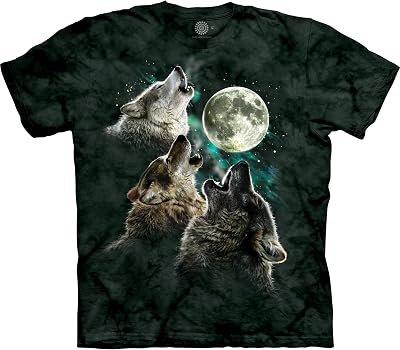
Black-ground prints with white or near-white ink are the most photogenic combination in the category — maximum separation holds after the camera flattens everything a stop or two. Conversely, low-contrast prints (heather grey on charcoal, tone-on-tone) that look sophisticated in person can vanish entirely in a photo. That is a feature if you want stealth; a disappointment if the photo was the point.
Rule two: the twenty-foot test
Step twenty feet from a mirror or a friend and look at the tee for two seconds. If the graphic is still readable — shape, silhouette, one word — it will read in photos taken at any honest distance. Prints that require arm's-length study photograph as texture, not graphic. Neither is wrong; know which one you are buying.
Rule three: watch the physics
- Fine repeating patterns moiré. Tight halftones and dense micro-patterns interfere with camera sensors and print as wavy interference — the one defect you cannot see in the mirror.
- Glossy ink flares. High-shine plastisol prints catch light and blow out to white in flash photos; matte inks keep their value.
- Placement shapes the body. A vertical print elongates, a wide chest print broadens, a shoulder-wrap print adds dimension the lens loves. Buy the placement that photographs the body you want.
The motion check
Street shots catch people mid-stride, mid-turn. Prints that wrap the body read differently in motion than standing — sleeves travel, chest prints rotate off-axis, hems swing the graphic. Give the tee a walk-past-a-phone-camera test; if the graphic stays coherent at an angle, it will survive candid shooting, which is the only shooting that matters.
The one rule
Buy for the light you will be photographed in: high contrast, matte ink, readable at twenty feet, coherent in motion — the graphic that passes all four will look better in the photo than it did in the store, which is the whole career of a great tee.
As Worn in This Note
Shop the Look
 -13%
The Mountain
The Mountain Three Wolf Moon Short Sleeve Tee
The Mountain
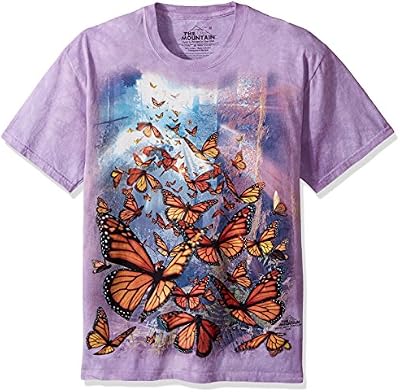
The Mountain Monarch Butterflies Adult T-Shirt
As an Amazon Associate, we earn from qualifying purchases.
Price and availability are subject to change on the retailer's site.
More Like This

One Print, Five Cities: Graphic Tees That Travel Well
 Emiko Tanabe
Real Vintage or Modern Repro? The Faded-Print Test
 Dusty Merritt

Indie Artist Tees: Small Studios, Big Prints
 Linnea Holt

Graphic Tees After Dark: The Evening Print
 Talia Mendes

Western Graphic Tees: Rodeo Prints, City-Broken
 Andre Beaumont

Plus-Size Graphic Tees: Print Scale and Drape, Solved
 Davina Cross