

Rosa Aguirre
Matching-without-matching family-portrait stylist.
Fabric Labels, Decoded
The fiber content on the tag predicts everything — how a garment fits at 3pm, how it survives the wash, whether it travels. Cotton, viscose, and the blends, translated.
The tag knows the future
Shoppers judge a garment by its photo; the garment judges you right back by its fiber content. The label predicts whether a top will stretch out by mid-afternoon, whether a dress will need an iron after a suitcase, whether pants will bag at the knee by Thursday. Two fabrics dominate the affordable wardrobe — cotton and viscose — and understanding them, plus the poly-blend logic that tweaks them, is the difference between buying clothes and buying surprises.
Cotton: the honest one
- What 100% cotton promises: breathability, softness that improves with washing, and no stink retention — cotton absorbs moisture and releases it, which is why it feels cool in summer.
- What it costs you: wrinkles (poplin and broadcloth crease at a glance), and shrinkage in the first hot wash — which is why experienced cotton buyers wash cold and hang dry.
- Weave decides personality. Flannel is brushed cotton: soft, warm, casual. Poplin is smooth and crisp: shirting, structured, dressier. Jersey is knitted cotton: stretchy, comfortable, prone to relaxing out of shape. Same fiber, three different lives.
Viscose: the draper
- What it promises: drape. Viscose (also sold as rayon) falls in fluid folds that read instantly dressier than cotton at the same price — it is why so many inexpensive "elevated" dresses and blouses use it.
- What it costs you: care. Viscose weakens when wet, shrinks in heat, and wrinkles if you look at it sideways. Cold gentle wash or dry clean, hang to dry, steam rather than iron.
- How to spot quality: a heavier viscose twill or crepe hangs and lasts; thin viscose clings to every seam and dies young. The listing will usually say "viscose twill" or "fluid twill" for the good stuff.
Blends: reading the percentages
The last few percent of a blend does disproportionate work. Elastane or spandex at 2-5% turns cotton or viscose into a fabric that holds shape through a workday — this is the secret of ponte pants and stretch jeans. Polyester blended with viscose reduces the wrinkling but dulls the drape and the breathability; a 30% poly content is the ceiling before the garment starts feeling like a tent. Cotton-poly at 65/35 is the workwear compromise: tougher, less breathable, wrinkle-resistant. When a listing hides the blend or says "polyester" alone, expect easy care and zero drape.
Translating label to closet
Workwear that must survive 9-to-9: cotton blends with stretch, ponte, woven poly. Weekend comfort in hot weather: cotton jersey, linen blends, viscose washed gentle. Travel capsules: knit fabrics and stretch wovens — anything the label says will need an iron stays home. Special-occasion drape on a budget: viscose in a heavier twill, steamed in the hotel bathroom.
Care symbols, the short version
Washtub with a hand: it means it, especially for viscose. Washtub with 30: cold wash, always, for anything with elastane (heat kills the recovery). Triangle crossed out: no bleach, which yellows cotton and murders color. Iron with one dot: low, and use a press cloth on viscose. When in doubt, cold water and a drying rack have never ruined a garment that dry cleaning would have saved.
The one rule
Read the tag before the reviews: fiber content is the outfit's contract with your body, and everything — fit at 3pm, washability, travel-worthiness — is written there in percentages.
As Worn in This Note
Shop the Look
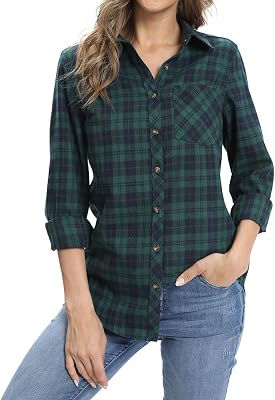
Fuinloth
Fuinloth Women's Flannel Button Down Shirt, Plaid Long Sleeve Pure Cotton with Pocket
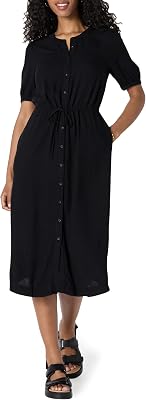
Amazon Essentials
Amazon Essentials Women's Relaxed Fit Half-Sleeve Button Front Drawstring Waist Midi A-Line Dress with Pockets
As an Amazon Associate, we earn from qualifying purchases.
Price and availability are subject to change on the retailer's site.