




Clementine Voss
Cold-weather outfit engineer. Mittens are a styling choice.
Thermal Truth: Base Layers Youll Actually Keep On Indoors
A base layer fails the moment you have to peel it off at your desk. The honest differences between fleece-lined and merino, why fit decides everything, and how to test a thermal top before you buy three.
The indoor test
A base layer is bought for the cold platform and judged at the desk. The test that matters is not how warm it feels outside — it is whether, twenty minutes into an overheated office, you still want it on your skin. Every rule below exists to pass that test.
Fleece-lined, honestly
Modern fleece-lined thermals are warmer per millimeter than almost anything, and the plush interior is genuinely pleasant at 6 a.m. The trade is ventilation: brushed fleece traps heat in both directions, so a real walk indoors turns into a swamp. Fleece lining belongs on short exposures — the commute, the dog loop, the parking lot — sized slim and worn under something you can shed. As an all-day indoor layer it is the wrong tool, however good it feels at the door.
Merinos quiet advantage
Merino wool regulates instead of just insulating: warm on the platform, not swampy at the desk, dry by morning if rinsed overnight, and — the underrated feature — it does not develop a smell by Thursday the way synthetics and cotton do. The 150-to-200-weight class is the sweet spot for daily wear under a shirt or sweater. The catch is price and patience: cold wash, no softener, flat dry.
Good synthetics exist — check the panels
The honest budget answer is that well-made synthetic thermals now wick and stretch beautifully. What separates the good ones is panel design: mesh or lighter-knit zones behind the knees and under the arms vent where the body actually overheats. A synthetic that is one uniform fleece density will always be an outdoor-only piece.
Fit is the whole game
A base layer works by sitting against the skin — air gaps insulate nothing. But against the skin is not the same as compression: the right top moves with the shoulder, lies flat under a shirt, and survives a full workday. Raglan sleeves extend the reach without the sleeve riding up; flat seams keep a backpack strap from printing a stripe; thumb holes keep the wrist gap closed under a coat. If it bunches at the waist under your work top, it is a sport piece, not a base layer.
Care decides the lifespan
Wash cold, skip the fabric softener (it coats the fibers and kills both wicking and warmth), and dry flat. A base layer treated this way holds its stretch for seasons; the same piece cooked in a dryer is a rag by February. Buy one, test it for a week on your actual commute and your actual desk — then buy the second and third in the same model.
As Worn in This Note
Shop the Look
 -26%
baleaf
baleaf Women's Thermal Tops Fleece Lined Shirts Winter Long Sleeve Running | Warm, Stretchy, Crew Neck, Thumb Holes and Zippered Pocket Make Cold Weather Sports Convenient, Ideal for Gear Workout Hiking
baleaf
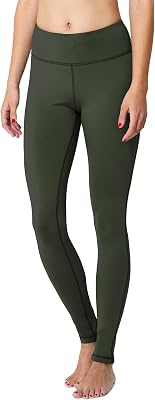
baleaf Women's Fleece Lined Leggings Thermal Warm Tights for Cold Weather High Waisted with Tummy Control
As an Amazon Associate, we earn from qualifying purchases.
Price and availability are subject to change on the retailer's site.