



Colin Marsh
Reads garment labels for a living. Cotton purist, stitch skeptic.
Dress Shirt Collars, Decoded
The collar decides a dress shirt's formality long before the fabric or fit come into play. Spread, point, and button-down — what each one signals, who it suits, and how to deploy them.
The collar is the shirt
Two dress shirts can share fabric, fit, and price and still land in different zip codes of formality, because the collar is the part of the shirt that faces the world head-on. It frames the face, sets the angle for a tie, and announces the shirt's intent before anything else registers. Learning three collars — really learning them — does more for a wardrobe than owning twenty shirts chosen at random.
Spread: the modern default
Points angled outward, collar band cut wide, big tie-knot territory. The spread collar is the most versatile of the formal options: it holds a half-Windsor beautifully, flatters a narrow or long face by adding horizontal width, and looks current under a jacket with natural shoulders. It is the collar to reach for when the dress code says business and you want to look like this decade's version of it. The wider the spread, the more formal and more continental the read.
Point: the quiet classic
Points close together and angled down, narrow frame, small-knot friendly. The point collar is the workhorse of the last century and still the right answer for a rounder or wider face, where the vertical pull of the narrow points lengthens by contrast. It reads slightly more traditional than a spread — at home with a four-in-hand knot and oxford cloth. A point collar worn without a tie is the most conservative of the open-collar options, which in the right office is exactly the point.
Button-down: the casual king
Points fastened to the shirt with small buttons, soft roll, oxford cloth's natural partner. The button-down began on polo fields and never left the weekend. Buttoned under a blazer it is the single most useful smart-casual collar in existence — the buttons keep the line clean without a tie, the roll adds texture, and it forgives motion all day. It is not a black-tie collar: paired with a worsted suit it looks like a guest who wandered in from the garden party. Paired with chinos, denim, or flannel trousers, it is unbeatable.
Choosing by face and by destination
- Narrow or long face → spread. The horizontal lines add width where you want it.
- Round or square face → point. Vertical points extend; wide spreads widen.
- Tie planned → spread or point by knot size. Big knots need big spreads; small knots swim in them.
- No tie, all day → button-down. It is the only formal-adjacent collar engineered to behave open.
Fit at the collar
Whatever the style, the neck must close with room for exactly one finger — two means a collar half a size too big, which drags every shirt down with it. Dress shirts sized by neck and sleeve instead of S-M-L exist for this reason; the few minutes spent measuring beat every shortcut. A collar that fits makes an inexpensive shirt look tailored; a collar that does not makes an expensive one look rented.
The one rule
Match the collar to the face and the destination, in that order — the right collar on the wrong face reads costume, and the right collar at the wrong event reads clueless. Both problems are solved by the same five seconds of thought.
As Worn in This Note
Shop the Look
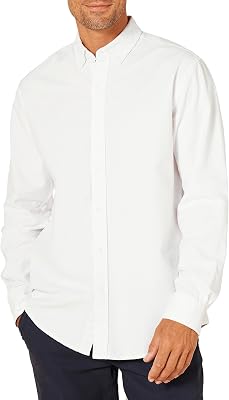
Amazon Essentials
Amazon Essentials Men's Regular-Fit Long Sleeve Oxford Shirt, 100% Cotton, White
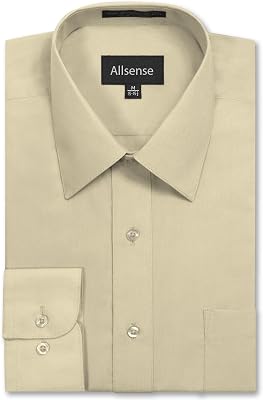
Allsense
Allsense Men's Regular-Fit Long-Sleeve Dress Shirt Button-Down Collar Wrinkle-Resistant Office & Business Casual
As an Amazon Associate, we earn from qualifying purchases.
Price and availability are subject to change on the retailer's site.