
Liam Walker
Fit-and-fabric nerd. I read the size chart so you don't have to.
Caring for Cotton: Wash Day Basics
Your tees die in the dryer, not in the store. Water temperature, spin, drying and folding — the care routine that makes basics last years, not months.
The dryer is where tees go to die
Nobody's favorite t-shirt wore out from being worn. It wore out at home, in the machine — shrunk a millimeter per wash in hot water, pilled in a high-heat drum, stretched on a hanger, faded in daylight. Cotton basics are remarkably durable garments subjected to remarkably careless care, and the gap between a tee that lasts two years and one that lasts ten is not quality — it is wash day behavior.
The full routine, in the order the laundry moves through your home.
Before the machine — sort and prep
Three separations matter: darks from lights (dye transfer is permanent), heavy from delicate (zippers and rivets abrade thin jersey in the drum), and "very dirty" from "just worn" (the latter needs a far gentler cycle than the former). Turn everything with prints, pleats or wash-finishes inside out — prints crack from direct abrasion, and mineral washes age better when the tumbling happens against the inside. Button nothing, zip everything, and pretreat collars and cuffs directly: those carry the oils that become the dinginess nobody can explain.
Water temperature — colder than you think
Modern detergents are engineered for cold water, and cold is correct for almost everything: colors stay put, fibers stay sized, energy stays cheap. Warm water belongs only to genuinely soiled loads and whites that need peroxide brightening. Hot water — the default of a previous era — is now reserved in a clothing household for exactly one job: bed linens after illness. Every degree hotter is a small payment against the garment's life.
The cycle and the dose
Use the gentle or permanent-press cycle for knits and anything with elastane; the normal cycle is for towels and denim. And measure the detergent — the overdose habit is the silent killer. Excess detergent redeposits on fabric as residue that greys colors and stiffens hand-feel, while doing nothing extra for cleaning. Half the recommended dose is usually the full correct amount; your rinsing machine will confirm with softer, truer-colored clothes.
Drying — the expensive part
The dryer is the enemy: high heat relaxes cotton fibers and they contract — that is shrinkage — while mechanical abrasion pills the surface. Air drying adds years to basics at zero cost. The technique: shake each piece out, smooth it roughly into shape, and dry flat for knits or hang for wovens from the hem where the weight pulls wrinkles out instead of shoulder bumps in. Keep direct sun off dark colors; it fades them faster than a hundred washes. The one honest exception: a brief tumble on low with no heat, purely to soften air-dried cotton that dried board-stiff on a line.
Folding versus hanging
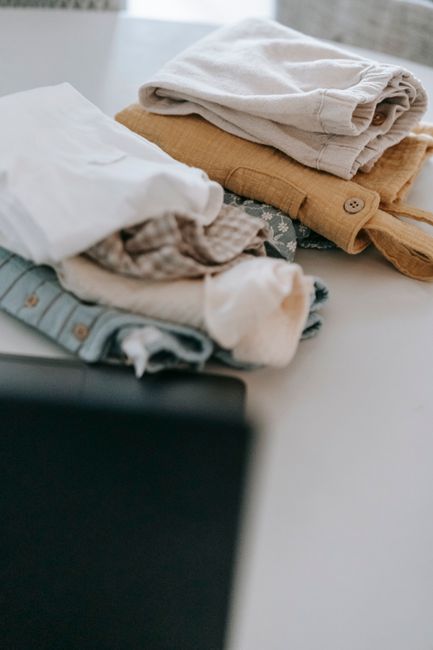
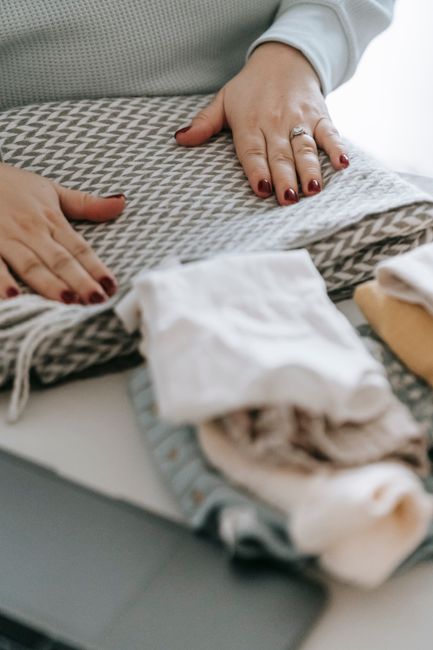
Knits — tees, joggers, sweaters — get folded. Hanging stretches shoulders into little peaks that no wash fully reverses, and gravity pulls cuffs out of shape over months. Fold along the seams, stack loosely rather than packed tight, and the drawer stays as wrinkle-free as any hanger arrangement. Wovens and anything tailored hang, on proper hangers, spaced an inch apart so air moves between them.
The repair habit
A loose seam takes sixty seconds on the machine you can borrow; a missing button takes two minutes and the spare sewn into the side seam by a thoughtful factory. The garments that survive a decade are not the ones that never broke — they are the ones someone fixed the week they broke, before the small failure became the retirement reason.
The payoff
This entire routine costs perhaps ten extra minutes per wash day, and it is the difference between replacing basics annually and replacing them when styles actually change. Care is the cheapest wardrobe extender there is — buy the good tee once, and then simply stop killing it.
As Worn in This Note
Shop the Look
As an Amazon Associate, we earn from qualifying purchases.
Price and availability are subject to change on the retailer's site.