The Ericdress Edit
The Ericdress editorial desk — picks, tests and prices the looks we post.
Style on a Budget: 6 Smart Rules
Looking good is a skill problem before it is a money problem. Six rules — fabric over brand, cost-per-wear math, the alteration trick — that outperform spending.
Style is mostly a skill problem
The fashion industry sells one story: that looking good tracks spending. Two decades of watching extremely well-dressed people in extremely cheap clothes has convinced us of the opposite — style is a skill stack, and money substitutes for skill poorly in both directions. The person who understands fit, fabric and palette in a twenty-dollar outfit beats the person who understands none of it in two thousand dollars of it, every single time.
Six rules, learned the long way. None of them requires spending more.
Rule one — fabric over brand, always
Turn the tag and read the content before you read the label. A heavyweight cotton with real weave will outperform a famous logo on thin polyester in every photograph and every wash. Learn three good-feeling fabrics by hand (heavy cotton jersey, ribbed knit, ponte) and three bad signs (paper-thin polyester, static-prone satin, anything that pills when rubbed on itself in the store). Your fingers become a better filter than any price tier.
Rule two — cost-per-wear is the only price
The sticker price is fiction; the real cost is price divided by wears. A $15 tee worn weekly for a year costs three cents an outing. A $90 statement top worn twice costs $45 a wear — fifteen hundred percent more for less utility. Before any purchase, estimate the wears honestly. This single habit reorganizes an entire budget away from the pieces that photograph well in the cart and toward the pieces that carry a life.
Rule three — buy the combinable, not the spectacular
The most expensive wardrobe is one of standalone pieces: each item that matches nothing forces the next purchase to complete it. Flip the test before buying: does it make at least three outfits with what you own? Spectacular singles fail this constantly; plain combinables pass it constantly, which is why stylish minimalists own "boring" clothes and look better than everyone. Boring is what compounding looks like from outside.
Rule four — the ten-dollar alteration
Off the rack, almost nothing fits anyone — hems drag, waists gap, sleeves blouse. A basic alteration costs less than a takeaway dinner and converts near-miss into personal garment. Budget dressing at the tailor's level: buy for the shoulders and bust (the unfixable parts), tailor the hems and waist (the fixable ones). This is the single highest-leverage spending in cheap dressing, and almost nobody uses it.
Rule five — maintain what you own
The cheapest garment is the one already in your closet, and its lifespan is a choice: cold washes, air drying, prompt repairs, proper folding. A $20 tee treated carefully outlasts a $60 tee treated carelessly — making maintenance the highest-paying style skill per minute invested. The expensive-looking wardrobe is largely the well-kept one.
Rule six — one palette, held for years
Everything above compounds inside a stable color story. A locked palette of three or four neutrals means every future purchase plugs into every past one — the wardrobe grows in combinability instead of in clutter. Trend chasers pay full price every season for new combinations; palette holders get new combinations free forever from the same rack. Choose your four colors once, and let every rule above run inside them.
The stack
Fabric judgment, wear math, combinability, alterations, maintenance, palette. Six skills, zero spending required to start, and each one permanently raises how every future dollar performs. That is what style on a budget actually is — not dressing cheap, but spending like it is a skill you intend to keep.
As Worn in This Note
Shop the Look
Gildan
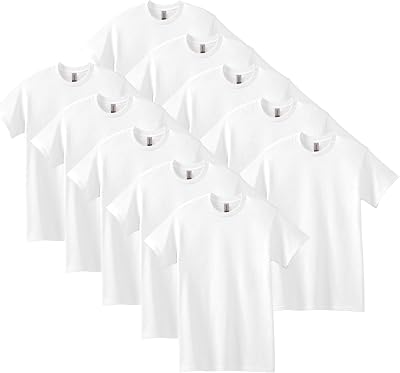
Gildan Men's 10-Pack Heavy Cotton Adult T-Shirt (G5000)

Gildan
Gildan Unisex Adult Fleece Crewneck Sweatshirt, Style G18000, Multipack
As an Amazon Associate, we earn from qualifying purchases.
Price and availability are subject to change on the retailer's site.
More Like This
The Cold-Office Formula: Cardigan Layers for 62°F Desks
 Priya Sharma
The Winter Wedding Guest: What Photographs Well at Four P.M.
 Rosalie Hart

The Holiday-Party Formula: One Shine Piece, Two Anchors
 Talia Mendes

The Gift List: Clothes People Actually Keep
 Marianne Foyle
The Puffer Vest, Unbulked
 August Peverell

The Family Photo, Styled
 Paige Whitmore